INVESTING IN STOCKS AND BONDS THROUGH A STOCK BROKERAGE FIRM
Potential of Brokers Skimming Margin Cream
Question: Is This Type of Skimming Maybe Common Practice?
Possible Need to Liquidate a Client’s Holding without Their Knowledge: A Workaround Not in the Client’s Best Interests
The Temptation for Stock Brokers to Advocate High-Risk Instruments to Cover ‘Phantom’ Trades
Dear Ones,
It seems possible to me there may be stock and bond brokerage conflict of interest with individual investors because of side trading by brokers. I say this because of experiences I had as an individual investor with a prestigious stock broker in years past. First some background regarding putting savings in banks, and then the question regarding side trading by brokers, and the ensuing conflict of interest …
PUTTING SAVINGS IN BANKS
If banks, say, take our savings into a savings account or CD, they are allowed to provide us a low rate of interest, and then they may invest that money in somewhat riskier ways, so as to earn our profit on the money we invest.
Potential Risks
The potential risk for the person who places his or her savings into a savings account or CD is the possibility of large-scale bank failures, as in the case of the Great Depression, when I recall my mom said people lined up on the streets trying to withdraw their savings from the banks, but were not able to because the banks failed.
These days, as I understand it, our bank savings are secured by the SEC or maybe FINRA, up to a certain per-person limit. That may mitigate the risk of large-scale bank failures … at least, up to a point.
INVESTING IN STOCKS AND BONDS THROUGH A STOCK BROKERAGE FIRM
Potential of Brokers Skimming Margin Cream
When we invest our savings in stocks and bonds, say, in a margin account, then it seems to me that the opportunity exists for the stock broker to benefit from our holdings in a way a little reminiscent of banks. For instance, might not the stock broker use our margin account to day trade equities or maybe bonds in hopes of skimming some cream off our account, with the client being none the wiser?
Question: Is This Type of Skimming Maybe Common Practice? Is that allowed, on Wall Street? Maybe it is common practice amongst stock brokerages, and I am not familiar with the practice?
This is the question I have: Do any of my readers know whether this skimming of margin cream is standard stock brokerage practice? If it is, then, I feel, there would be a potential broker-client conflict of interest …
Possible Need to Liquidate a Client’s Holding without Their Knowledge: A Workaround Not in the Client’s Best Interests
I know, from a year of day trading myself, that it is hard to beat the market through day trading. Sometimes, though, people get into the thrill of day trading, so much so that they do not want to look at the bottom line and find out for sure whether they bettered the market over the course of a year. Do you not feel this to be true?
I myself found, using the best software I could obtain, that after a great deal of work every morning, and plenty of thrills, I ended up with no profits (and no losses) at the end of a year.
The best of stock brokers intent on skimming margin cream would most likely know what I learned … that the chance exists that some of the client’s stocks would need to be liquidated because of a broker’s side traded margin deal gone south, unbeknownst to the client.
I remember in my mom’s time, stocks and bonds were actual pieces of paper that a brokerage handed to a client. Thus the client knew for sure what he or she owned; the stockholder or bondholder had the paper to prove it.
Today, however, investors often chose to leave their stock and bond certificates with their brokers. It is true, the investor can see on their monthly statement that they have such-and-such investments, numbered such and such. That, however, is the only proof they have that they have purchased and now own these stocks and bonds.
In a way, these stock brokerage statements are but figments; surely it might be possible, through sleight of hand, to sell some of the underlying instruments to pay off margin debt, without the client being wiser, the presumption being that similar instruments might be purchased, and their CUSIPs, for example, jimmied round, in the event the client wished to sell the (already sold) stock or bond, or to transfer the entire account to another brokerage.
In a sense, then, the stock and bond holdings of the modern-day brokerage client might be viewed as ‘phantom’ holdings. While possible, it seems to me such an approach to skimming margin cream might cause some last-minute sweat of the brow of the broker if the client were to decide to trade or transfer a ‘phantom’ stock or bond.
The Temptation for Stock Brokers to Advocate High-Risk Instruments to Cover ‘Phantom’ Trades. Here is a more difficult call from an ethical standpoint: The broker might wish to cover losses from ‘phantom’ margin trades by persuading the client to accept risky stocks and bonds that are likely to decrease in value. Then the risky instruments might be sold by the broker … while remaining as if held on the client’s statement … and the money from the sales used in ‘phantom’ day trading, with profit going to the broker, and phantom trading losses covered by the decreased cost of the broker’s purchase of the risky stocks as they go down in price.
What I am thinking is that the desire of stock and bond brokers to profit from ‘phantom’ trades might lead them to push very risky stocks onto a client, to cover the broker’s losses. In such instances, the financial interests of the broker would be opposed to the financial interests of his client, do you not think?
In love, light and joy
This is Alice B. Clagett.
I Am of the Stars … and so are you!
Written and filmed on 2 February 2020; published on 16 August 2020 Location: Los Angeles, California
VIDEO BY ALICE
SUMMARY OF THE VIDEO
Rogue Town: Counterfeit Money Laundering to Tourists or Through Local Banks
Rogue Town: Siege as An Option to Bring It Into Line
Real Estate Seizure Gambit in a Putative Rogue Town
Dealing with Rogue Towns, from a Federal Standpoint
Conclusion
MORE INFORMATION
Dear ones, there is an edited Summary after the video …
VIDEO BY ALICE
SUMMARY OF THE VIDEO
Hello, Dear Ones, It’s Alice. I Am of the Stars.
I would like to talk a little today about the things that probably will not go wrong with America but that, in the worst case scenario might take place in a few small towns of America. And so these are things that we should look out for and have a plan for in advance, just in case. That is how I feel. It has to do with social unrest and the economy of the United States.
Rogue Town: Counterfeit Money Laundering to Tourists or Through Local Banks
There is a chance, in the coming years, that one of these scenarios might come up: It might be that a town might have a sheriff or police officer who is in collusion with a crime gang, or a mob or mafia … a crime family. And the crime family or crime gang might be producing its own counterfeit United States ‘money’.
They might be passing it out to the tourists who come into town, and laundering it in that way. Or they might be laundering it through the local banks to other parts of the country.
Now if that happens … if the crime gang controls the town … what we have, as far as I can tell, is secession from the United States. The reason for that is, one of the things the Federal Government does is provide a currency for all the states in the United States.
If a town chooses to produce its own currency, then in effect it is setting itself up as a sovereign nation with its own currency, trading on the goodwill and the economic success of the larger governing body, the United States.
Rogue Town: Siege as An Option to Bring It Into Line
If that were to happen, I wonder where would be the place to go to try to get the situation handled. I say that because, in a broad sense, the actions of a crime gang town might be considered terrorist actions,
If the economy is tight here in America, federally, then one way to handle such a situation of a rogue town would be to create a stage of siege to barricade the incoming and outgoing traffic on the roads to other parts of the country, and to prevent air flights from coming in.
The advantage of this would be … with luck … less loss of life than, say, sending in a SWAT team or a National Guard, or worse yet, doing a pinpoint strike.
So that is my idea … something simple. If that did not work, after a length of time, then I would look at more serious action.
Real Estate Seizure Gambit in a Putative Rogue Town
There is one other thing that LI think might happen; and I think, in this case, it would be a different sort of action that would be taken: It is possible that there may be some small towns coming up, where, if a person from another part of the country buys real estate there … if it is a crime town, like the one I described above … they may find that they are arrested on trumped up charges by, say, the sheriff or police officer who is in league with the crime family, and that their only way of getting out of the situation … or worse yet, execution … would be to give their land to the rogue law enforcement officer for a mere dollar, for a pittance … for nothing … in exchange for a lighter sentence or no death sentence … or a chance to leave town and never come back, as in the old days in the Wild West, the days of formation of the country, when laws were rather ‘catch as catch can’.
If that were to happen, that anyone’s real estate could be seized and sold, and they could be In prison with no real reason for it, then in essence, no one could hold property. No one would have property rights in that town, except for the people in the crime gangs.
The crime gang could move into any house in town that it wanted to … say, murder the owners, and falsify the real estate ownership records saying that they were the new owners, and that the house had been sold for a dollar whatever price it might be.
Dealing with Rogue Towns, from a Federal Standpoint
What does this mean in terms of the United States, and social unrest, and secession? To me it means that the most basic right of American people is being violated; the most basic right of property ownership is being violated. And so that town … that rogue town … has violated the United States Constitution.
Again I feel that this is an act of secession. You could consider it a terrorist act too. But in this case what I would do is ask the CIA Factbook to list that town as a place that is too dangerous for Americans from other parts of the country to visit; and to explain why. And I would ask them to issue an advisory that people should not buy land in that area, and to explain why.
It would be kind of like it used to be, to buy land in Mexico: You could not really buy land; you had to go in with a partner who was a Mexican national, if you were American. It might be kind of like that, in rogue United States towns, eventually.
Of course, the other thing that could be done, if property rights are constantly violated, is simply for the United States government to prohibit United States citizens from purchasing land there, if they are not natives of the local area.
Really it would be as if the rogue town were a foreign nation, and the property rights of the mainland Americans would need to be rewritten in the context of that. That is what I feel. We may experience a town or two like that, in the coming years, since everyone is becoming psychic, and they are clearing things out of their energy fields.
Such rogue towns might even exist right now, and they might need a little ‘what for’ … a little getting in tune with the situation in the rest of America. That is what I think.
Conclusion
I would not take this too seriously. We Americans are a strong people, and we can take it in stride, even if it should happen in the rare instance.
Enough talking. You all take care. Love you lots. Have a wonderful February.
In love, light and joy
This is Alice B. Clagett.
I Am of the Stars … and so are you!
…………………………………………………
MORE INFORMATION
Link: “Catastrophic Childhood Experiences: Wifer-Hacker,” by Alice B. Clagett, written and published on 23 April 2017 … https://wp.me/p2Rkym-lMP ..
Filmed on 2 February 2020; published on 16 August 2020
Location: Los Angeles, California
VIDEO BY ALICE
SUMMARY OF THE VIDEO
Dear ones, there is an edited Summary after the video …
VIDEO BY ALICE
SUMMARY OF THE VIDEO
Hello, Dear Ones, It’s Alice. I Am of the Stars.
I thought I would tell you about a scary astral story that went by the window of my imagination some years ago. I was vacationing, and not here in Los Angeles. I had a funny feeling that something awful might happen … like a premonition of disaster … but I did not know what.
I figured it was not really going to happen, but to be on the safe side, it might be good to put some money in a safe deposit box. I found out since then that putting money in a safe deposit box is a very bad idea; it is not a very safe thing to do.
But back then I thought, you know: I will put a little money into a safe deposit box, and leave it there in case the worst happens; and at least I will have a little cash.
Quite some amount of time went by. I was getting near the end of my vacation; and I had an astral dream. I dreamt that a police officer who was crooked wanted to send me to jail for potentially interfering with a drug operation in that town.
I do not know that there are drug operations in that town; in fact, I do not think there are. Maybe it was in a different town, and I just received the dream about it, but it was happening elsewhere. That is frequently the case.
But so anyway, the dream kind of terrified me, because in the dream, this police officer went to my bank … you know, dreams often convert the national news to a person’s own sphere of endeavors … and took the money out of my safe deposit box, and substituted marked counterfeit bills.
And so I had had another premonition. So I went back to the bank, and took the money out of the safe deposit box, and gave it back to the bank just there and then. So the money never left the bank, and they credited it to my account.
So if the money was counterfeit … it seems unlikely; I was probably pegging on somebody else’s scary astral story … But let’s say the money was counterfeited, then I guess the bank bore the brunt of it.
I do not know what a bank would do, in a situation like that. That would be a tough one, because it would be stuck with however much in counterfeit bills that were basically the responsibility of a police officer who was laundering counterfeit money for the drug operation that he was supposed to be preventing there in that town.
Apocryphal though this story may be, I feel we should look out for situations like that all across America, as times are tough, and people are resorting to all kinds of things to make ends meet. That is my thought.
The takeaway is: Let the banks be careful as to what is happening. Maybe they could develop guidelines prior to something like that happening, to make sure that they do not get stuck holding the bag.
All right, you all, I know this is a weird one. You all take care, and welcome to February 2020. It is looking to be a really wonderful year in terms of Soul clearing.
In love, light and joy
This is Alice B. Clagett.
I Am of the Stars … and so are you!
Dear ones, there is an edited Summary after the video …
VIDEO BY ALICE
SUMMARY OF THE VIDEO
Hello, Dear Ones, It’s Alice. I Am of the Stars.
I just had a thought, in a hypothetical scenario, where this small town or that, in the United States, might choose to start producing counterfeit, and distributing it to the tourists that come in.
I think that, if a town is producing counterfeit, or distributing it, we might consider it perhaps a terrorist activity. Actually, technically, it is secession from the Union, because they have chosen to set up their own paper currency, in that case.
Of course, nothing like that would happen here in the United States; this is just a hypothetical, sci-fi situation. I have mentioned in the past, and I will mention once more, my feeling about such a scenario …
Should it happen, I would suggest the cheapest way for the United States to deal with a secessionist town would be to barricade the main roads in and out, so that traffic cannot move in and out. Basically you have a siege situation going on. I would also remove their air flight and import of Walmart items rights. That is what I would do. That is the cheapest thing.
And if that did not work … if they tried to barge through the barricades and so forth … then we could always send in a commando unit, or a pinpoint strike could be effected. But the thing about pinpoint strikes is that there are a lot of civilian casualties. I would think twice about that.
I know National Reserves are very expensive to use, and the Nation is short on cash. That is why I suggest this low-cost alternative in case such a thing should ever come up.
And I would say that, if it did come up … and it seems to me 99 percent impossible … that we should expect it to happen in only one or two instances. Then everyone else would fall back into line, I feel.
Well, I hope you will forgive me for being so hard-nosed about this; that is just what I feel about it. I also think the CIA Factbook should indicate American towns that are secessionist or terrorist in inclination, so that tourists would not be tempted to go there. That could be like a warning signal.
So, I do not know …. My dad was a veteran of World War II, and I guess, even though I have never seen military action, I do have a feel for military maneuvers, and a concern for cost-cutting in the United States budget.
I am hoping no towns would make that choice; but if they did, that would be my recommendation.
You all take care; and do not pass around counterfeit. It is important. Stand with the U.S. of A.
In love, light and joy
This is Alice B. Clagett.
I Am of the Stars … and so are you!
Filmed on 2 February 2020; published on 16 August 2020; revised on 26 July 2024
Location: Los Angeles, California
Wild West, counterfeit, small towns of America, secession, social unrest, economy, finance, National Reserves, civilian casualties, military, CIA, secret service, tourism, terrorism, travels in the United States, sedition, retail,
Then I read in an article written for CNET by Katie Teague and Kelsey Fogarty on 14 September 2021 that the IRS might take 6 months (rather than the usual 3 weeks) to process the tax returns of about 10% of its taxpayers. Here is an update on the state of as-yet-unprocessed returns for tax year 2021 and a similar warning for tax return delays for tax year 2022 … Link: “Your Tax Return Might Be Delayed This Year, the IRS Warns,” by Alicia Adamczyk, 13 January 2022, in Make It … https://www.cnbc.com/2022/01/13/irs-warns-there-will-be-delays-processing-2021-tax-returns-and-refunds.html ..
And finally, I read that the United States Post Office is cutting post office hours and lengthening delivery times in a new 10-year plan … Link: “USPS Chief Dejoy Cuts Post Office Hours, Lengthens Delivery Times in New 10-Year Plan,” by Jacob Bogage, 23 March 2021, in The Washington Post …https://www.washingtonpost.com/business/2021/03/22/usps-dejoy-plan/ ..
…
1. ECONOMIC STRESSORS THAT MAY LEAD TO DECENTRALIZATION OF THE UNITED STATES GOVERNMENT top
I have some thoughts on the state of the nation. Intuitively, I sense economic stressors that may gradually lead to our Federal government taking a lesser role in the governance of the United States, compared to the role of regional alliances of states.
Just to put this into perspective, this might be more of a Libertarian notion as a way of the ruling of the United States, still within the plan of our democracy, but rather different in emphasis from what we have known for a long time as the Democratic / Republican dichotomy.
All this time, Greenpeace and Libertarianism have been on our ballots, so we know they are a part of our democratic process. Only the look and feel of them is quite different, and it may cause us to wonder what is happening in the coming years.
In the coming times, I see the Federal government continuing to provide military defense, social security payments, and leadership in foreign affairs. I also see states taking more initiative in regard to economics for their regions.
As to trade, I see future reliance on established railroad routes and water routes such as the Mississippi River. I anticipate that, should there be a gradual lessening of Federal power, then there might be more trade within an economic region, and less trade globally and nationally.
As to finance, I see potential reliance on barter, with care not to place our financial assets in overseas locations. Local-employment-based credit unions may come into favor as regional savings repositories.
There may be more reliance on those economic sectors that hold strong during recessions … such as locally grown food, locally obtainable building materials, and water supplies not piped in over long distances.
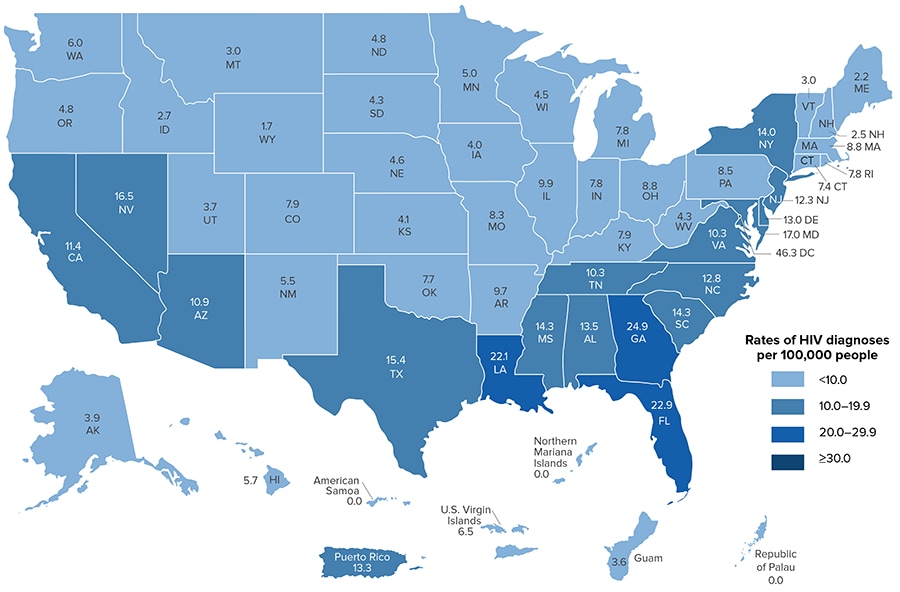
As to economic stressors, I suggest the overarching stressor of the COVID-19 pandemic, the slowly building economic impact of the HIV pandemic, and stress of regional aridity due to long-distance water transport costs,
A socially disruptive stressor is handheld psychosis, which may lead to chaotic events such as mass murders and actions by public utilities, local law enforcement, and the military regarding perceived dangers that do not truly exist. This might precipitate social unrest, especially in regions of the United States pinpointed by the Jade Helm exercises.
…
2. CAVEATS REGARDING POSSIBLE LOCI OF SOCIAL UNREST top
In United States cities, the high cost of housing and the increasing phenomenon of homelessness may lead to social unrest and attempted land grabs through anarchist behavior; this is something for which, I feel, every large city mayor and every state government ought to have on hand emergency action plans.
For states in arid regions, emergency anti-anarchist plans ought, I feel, to highlight security of water transport systems. Electrical grids, I feel, might also be an anarchist target.
I have a few examples for you, state by state …
In California, I see a rekindling of the Latin American ideal of revolutionary ardor, with possible attempts by undocumented workers … or documented workers fleeing from crimes in their homelands under false names. These energies might, for instance, take the form of faking murders of homeowners under pretense of COVID deaths. The intent might be a fast flip of real estate for profit for a revolutionary cause. Or such an attempt might be made so as to charge revolutionaries rent on homes acquired through COVID murder. Such murders might take place under the aegis of religious righteousness … or what I might term leftwing terrorism.
In others of the United States, there may be similar energies of fake COVID deaths to espouse other causes, such as black militance, white supremacy, and so on.
In Utah, there might be a Mormon separatist energy because of the seditionist history I have read took place with the founder of Mormonism. (I read that in Wikipedia.)
In Florida, there might be attempts on political power by drug lords from countries to the south. And so on.
We people in large United States cities can be a big help in creating peaceful environments for our children by offering our law enforcement departments volunteer help through neighborhood watch programs.
…
3. ON MAINTAINING A POSITIVE ATTITUDE IN THE FACE OF CHANGE top
It seems unlikely to me that anything would happen in a moment; rather I feel that the United States might very slowly tend towards a model of government more akin to the state by state model of our early years as a nation. We may find, in future, that traveling from one state to the next is a refreshingly new experience. Not everyone may be watching the same thing on television every night anymore; there may be less airline flights from here to there; and so the natural flavor and local color of each region of the United States may become more striking to the casual tourist.
In addition, it may be that some regions of the United States may be more perilous (that is, more dangerous) for tourist travel, as was the case for travelers in the early years of our nation.
I realize the prospect of change can be unsettling. It is good to keep in mind that changes such as those spoken of … if, indeed, change there be … would in all likelihood take place by slow stages, over the course of the next century or two. Thus I feel certain there would be plenty of time to make our plans and find our footing in the new.
…
4. POSSIBLE FUTURE UNITED STATES ECONOMIC REGIONS AND TRADE REGIONS top
This section has a series of maps that I have adapted to show possible United States economic regions and trade regions of the centuries that are to come. I would be interested in your comments regarding this intriguing topic of the eventual possibility that the United States government might become less centralized, and more imbued with local flavor and with the strong spirit of our local communities.
HIV-AIDS Pandemic Economic Stressor 1: One Eastern Economic Region Including the Southern States and the Eastern Seaboard
The first map looks like this …
Image: “HIV Pandemic Economic Stressor 1: One Eastern Economic Region Including the Southern States and the Eastern Seaboard,” adapted by Alice B. Clagett, 6 December 2019, CC BY-SA 4.0 … DESCRIPTION: To the right of the white line, One Eastern Economic Region including the Southern states and the Eastern Seaboard … CREDIT: The topographic map is “USA topo en.jpg” [USA Topographical Map], from Wikimedia Commons …
Image: “HIV Pandemic Economic Stressor 1: One Eastern Economic Region Including the Southern States and the Eastern Seaboard,” adapted by Alice B. Clagett, 6 December 2019, CC BY-SA 4.0 …
DESCRIPTION: To the right of the white line, One Eastern Economic Region including the Southern states and the Eastern Seaboard …
You can see a topographical map of the United States that also shows the aridity … the rainfall. States that are green have more rainfall; states that are yellow, less; and states that are red, very little rainfall. Then I have drawn a white line showing an economic region that includes the Eastern Seaboard and the Southern states.
These states are very much affected right now … more so than the other states … by the HIV and AIDS pandemic. And my thought was that that might act as a stressor that would consolidate that group of states into an economic region …
HIV-AIDS Pandemic Economic Stressor 2: An Eastern Seaboard Economic Region and a Southern Economic Region
This map encompasses the same general region as the prior map, but it is divided into two economic regions. To the right is the Eastern Seaboard, and to the bottom left, the Southern states. There is a yellow line between the two economic regions …
Image: “HIV Pandemic Economic Stressor 2: An Eastern Seaboard Economic Region and a Southern Economic Region,” adapted by Alice B. Clagett, 6 December 2019, CC BY-SA 4.0 … DESCRIPTION: To the right of the white line, the earlier Eastern Economic Region divided by the yellow line into two smaller regions: an Eastern Seaboard Region and a Southern Region … CREDIT: The topographic map is “USA topo en.jpg” [USA Topographical Map], from Wikimedia Commons … https://commons.wikimedia.org/wiki/File:USA_topo_en.jpg … CC BY-SA 3.0 Unported
Image: “HIV Pandemic Economic Stressor 2: An Eastern Seaboard Economic Region and a Southern Economic Region,” adapted by Alice B. Clagett, 6 December 2019, CC BY-SA 4.0 …
DESCRIPTION: To the right of the white line, the earlier Eastern Economic Region divided by the yellow line into two smaller regions: an Eastern Seaboard Economic Region and a Southern Economic Region …
So that would be two regions with their own special, local flavor, their own trade agreements; and maybe closely aligned with inter-region trade agreements.
Western Economic and Cultural Stressors: Northwest Economic Region and California Central Valley Economic Region
The below map deals with the West Coast. It shows two economic regions set apart from the rest of the United States with white lines. The upper one is the Northwest Economic Region, and the lower one is the California Central Valley Economic Region …
Image: “Western Economic and Cultural Stressors,” adapted by Alice B. Clagett, 6 December 2019, CC BY-SA 4.0 … DESCRIPTION: Along the Pacific Coast, two regions delineated by white lines. To the north is the Northwest Economic Region, including the parts of Washington state and Oregon with good rainfall. To the South is the California Central Valley Economic Region (also with good rainfall) … CREDIT: The topographic map is “USA topo en.jpg” [USA Topographical Map], from Wikimedia Commons … https://commons.wikimedia.org/wiki/File:USA_topo_en.jpg … CC BY-SA 3.0 Unported
Image: “Western Economic and Cultural Stressors: Northwest Economic Region and California Central Valley Economic Region,” adapted by Alice B. Clagett, 6 December 2019, CC BY-SA 4.0 …
DESCRIPTION: Along the Pacific Coast, two regions delineated by white lines. To the north is the Northwest Economic Region, including the parts of Washington state and Oregon with good rainfall. To the South is the California Central Valley Economic Region (also with good rainfall) …
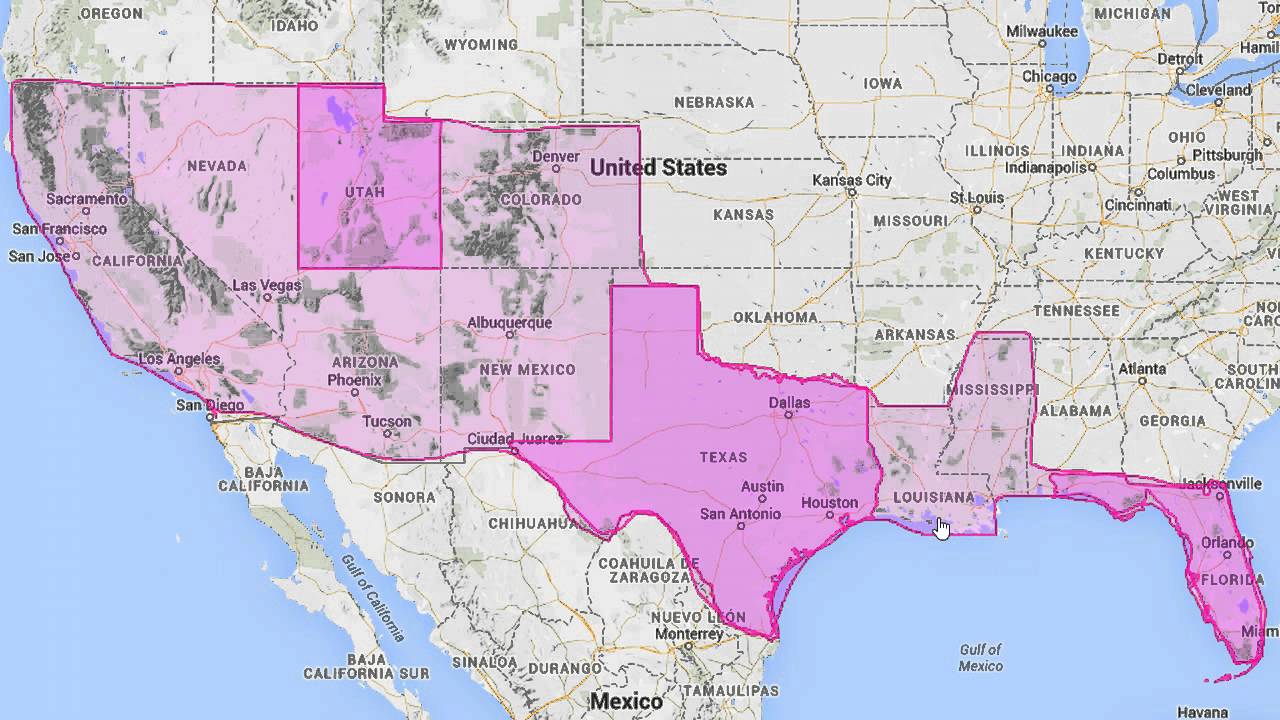
Jade Helm Stressors: A Utah-Colorado Trade Region; a Texas Trade Region; a Mexican Trade Corridor; and a Florida-Caribbean Trade Corridor
This is an interesting map. The Description is below the image …
Image: “Jade Helm Stressors: A Utah-Colorado Trade Region; a Texas Trade Region; a Mexican Trade Corridor; and a Florida-Caribbean Trade Corridor,” adapted by Alice B. Clagett, 6 December 2019, CC BY-SA 4.0 … DESCRIPTION: Circled in yellow are two possible regions that might secede from the Union, but with which reciprocal trade agreements might be negotiated. Topmost is a Utah-Colorado Trade Region (which might be divided into two separate areas based on dominant religion). Lower and to the right is a Texas Trade Region comprising what is now eastern, central, and northern Texas. Then there are two southern regions delineated in white. These are regions that might lean favorably towards alliance with Mexico, but with which we might anticipate establishing reciprocal trade agreements. To the left is a Mexican Trade Corridor comprising California from Los Angeles and to the south; the lower halves of Arizona and New Mexico, and the southwestern part of Texas. To the right is the state of Florida, which might lean favorably toward the Caribbean countries, but with which we might anticipate establishing reciprocal trade agreements; this I term the Florida-Caribbean Trade Corridor … CREDIT: The topographic map is “USA topo en.jpg” [USA Topographical Map], from Wikimedia Commons … https://commons.wikimedia.org/wiki/File:USA_topo_en.jpg … CC BY-SA 3.0 Unported
Image: “Jade Helm Stressors: A Utah-Colorado Trade Region; a Texas Trade Region; a Mexican Trade Corridor; and a Florida-Caribbean Trade Corridor,” adapted by Alice B. Clagett, 6 December 2019, CC BY-SA 4.0 …
DESCRIPTION: Circled in yellow are two possible regions that might secede from the Union, but with which reciprocal trade agreements might be negotiated. Topmost is a Utah-Colorado Trade Region (which might be divided into two separate areas based on dominant religion). Lower and to the right is a Texas Trade Region comprising what is now eastern, central, and northern Texas.
Then there are two southern regions delineated in white. These are regions that might lean favorably towards alliance with Mexico, but with which we might anticipate establishing reciprocal trade agreements.
To the left is a Mexican Trade Corridor comprising California from Los Angeles and to the south; the lower halves of Arizona and New Mexico, and the southwestern part of Texas.
To the right is the state of Florida, which might lean favorably toward the Caribbean countries, but with which we might anticipate establishing reciprocal trade agreements; this I term the Florida-Caribbean Trade Corridor …
As to the Utah-Colorado Trade Region: In Utah, the Mormon faith is very strong. And in Colorado, the Christian faith is very strong. I thought that those two areas of this economic region might pull separately apart, possibly along religious lines.
Southwestern Arid Region: Small Town and Native American Reservation Citadels
This is an interesting map. There is a Description below the image …
Image: “Southwestern Arid Region: Small Town and Native American Reservation Citadels,” adapted by Alice B. Clagett, 6 December 2019, CC BY-SA 4.0 … DESCRIPTION: Circled in white is the large Southwestern Arid Region, which might move to more local forms of small town government … as well as continuing with Native American Reservation governments … should the nation become less centralized. This economic region includes the Great Basin, the Great Rocky Mountains, and the western portion of the Great Plains … CREDIT: The topographic map is “USA topo en.jpg” [USA Topographical Map], from Wikimedia Commons … https://commons.wikimedia.org/wiki/File:USA_topo_en.jpg … CC BY-SA 3.0 Unported
Image: “Southwestern Arid Region: Small Town and Native American Reservation Citadels,” adapted by Alice B. Clagett, 6 December 2019, CC BY-SA 4.0 …
DESCRIPTION: Circled in white is the large Southwestern Arid Region, which might move to more local forms of small town government … as well as continuing with Native American Reservation governments … should the nation become less centralized. This economic region includes the Great Basin, the Great Rocky Mountains, and the western portion of the Great Plains …
This area of the country is very, very arid. One can tell that by the color. I have cordoned off this entire arid zone as an area where Native Americans may establish reservation ‘citadels’ or ‘city towns’ that might act as trading posts for the area, for instance. I consider that they would become more like ‘city states’ if transportation slows down in the United States, and especially in that area, over the centuries.
Central Breadbasket Economic Region
On this map, the area in question is rather green. There is a little yellow, so that part is a little more arid land. It comprises the United States to the west and to the south of the Great Lakes. It includes most of the Mississippi River Valley as well. It looks like this …
Image: “Central Breadbasket Economic Region,” adapted by Alice B. Clagett, 6 December 2019, CC BY-SA 4.0 … DESCRIPTION: Circled in green is a Central Breadbasket Economic Region, with plentiful rainfall and good river transportation. This includes the eastern portion of the Great Plains, as well as the area south of the Great Lakes, west of the Appalachians, and north of the Southernmost states … CREDIT: The topographic map is “USA topo en.jpg” [USA Topographical Map], from Wikimedia Commons … https://commons.wikimedia.org/wiki/File:USA_topo_en.jpg … CC BY-SA 3.0 Unported
Image: “Central Breadbasket Economic Region,” adapted by Alice B. Clagett, 6 December 2019, CC BY-SA 4.0 …
DESCRIPTION: Circled in green is a Central Breadbasket Economic Region, with plentiful rainfall and good river transportation. This includes the eastern portion of the Great Plains, as well as the area south of the Great Lakes, west of the Appalachians, and north of the Southernmost states …
We can anticipate that, if this continues to be a breadbasket area, it could provide food for other economic regions in the United States; and therefore, we would need to maintain some form of transportation to the south and to the east of the Central Breadbasket Region. The question would be whether transportation might be maintained across that vast, arid expanse to the west of the Breadbasket; or whether the Western Seaboard would need to grow its own foodstuffs as transportation became less prevalent.
Possible Future Capital Cities of the United States
Here is the last section, and an interesting one. I have for you three possibilities labeled 0, 1 and 2. The first is Washington, D.C., numbered ‘0’, because that is where the capital of the United States is right now.
Next is Lancaster, Pennsylvania, labeled ‘1’. Long ago, our nation’s capital was Lancaster; so I thought, perhaps one day our capital will be there once more.
And the last is Saint Louis, Missouri, labeled ‘2’. Saint Louis is right in the middle of the Breadbasket. I suggested Saint Louis as the second possibility because the location would be more centralized, and it might pull the other regions together.
Image: “Possible Future Capital Cities of the United States,” adapted by Alice B. Clagett, 6 December 2019, CC BY-SA 4.0 … DESCRIPTION: The current capital of the United States is Washington DC (numbered ‘0’ on the map). Because of the AIDS crisis in Washington DC, and because our nation’s capital was once Lancaster PA, I suggest eventual relocation of the Capital back to Lancaster (numbered ‘1’ on the map). Farther out in time, it may be that Saint Louis, MO (labeled ‘2’) would prove a good location for our nation’s capital … CREDIT: The topographic map is “USA topo en.jpg” [USA Topographical Map], from Wikimedia Commons … https://commons.wikimedia.org/wiki/File:USA_topo_en.jpg … CC BY-SA 3.0 Unported
Image: “Possible Future Capital Cities of the United States,” adapted by Alice B. Clagett, 6 December 2019, CC BY-SA 4.0 …
DESCRIPTION: The current capital of the United States is Washington DC (numbered ‘0’ on the map). Because of the AIDS crisis in Washington DC, and because our nation’s capital was once Lancaster PA, I suggest eventual relocation of the Capital back to Lancaster (numbered ‘1’ on the map). Farther out in time, it may be that Saint Louis, MO (labeled ‘2’) would prove a good location for our nation’s capital …
In the event of decentralization here in the United States, I feel the United States might expect to enjoy three power blocks along geographic lines of the three COVID pacts now in place amongst states in the Eastern States, the Midwest, and the Western States …
The Eastern States Multistate Council to do with COVID consists of the states of Connecticut, Delaware, Massachusetts, New York, New Jersey, Pennsylvania, and Rhode Island …
As well, there is the Midwest Governors Regional Pact” to do with COVID. This consists of the states of Illinois, Indiana, Kentucky, Michigan, Minnesota, Ohio, and Wisconsin …
Here is the map of the power blocks for these pacts, which, I feel, may well be expanded to assure continuity of taxation, mail delivery services, securance of real property rights, and local military defense, in the event of decentralization of the United States …
In love, light and joy
This is Alice B. Clagett.
I Am of the Stars … and so are you!
Blog written and published on 6 December 2019; revised and updated on 2 October 2024; video filmed on 23 February 2022 and published on 26 February 2022 and following
Prior titles: What If the United States Became Less Federal and More Regional in Government? and What If: Will the United States Become Less Centralized?
See also … Link: “Western States Pact and Possible Decentralization of the United States,” by Alice B. Clagett, written and published on 2 June 2020 … https://wp.me/p2Rkym-is3 ..
Image: “United States map of 1861, showing affiliation of states and territories regarding secession from the Union at the start of the American Civil War,” by Júlio Reis, 23 February 2007, from English Wikipedia … https://en.wikipedia.org/wiki/File:US_Secession_map_1861.svg … CC BY-SA 3.0.
Image: “United States map of 1861, showing affiliation of states and territories regarding secession from the Union at the start of the American Civil War,” by Júlio Reis, 23 February 2007, from English Wikimedia … https://en.wikipedia.org/wiki/File:US_Secession_map_1861.svg … CC BY-SA 3.0.
Dust Bowl Economic Stressor
Image: Map of states and counties affected by the Dust Bowl [1930s], sourced from US federal government dept. (NRCS SSRA-RAD).svg … “Based only on that PNG image. I made this file primarily using QGIS, and the following public domain … https://www.census.gov/geo/maps-data/data/tiger-cart-boundary.html shapefiles from census.gov] by Soil Science and Resource Assessment, Resource Assessment Division (NRCS SSRA-RAD) (Division of the U.S. Dept. Of Agriculture), 15 January 2012, from Wikimedia Commons … This work is in the public domain in the United States because it is a work prepared by an officer or employee of the United States Government as part of that person’s official duties under the terms of Title 17, Chapter 1, Section 105 of the US Code.
Image: Map of states and counties affected by the Dust Bowl [1930s], sourced from US federal government dept. (NRCS SSRA-RAD).svg … “Based only on that PNG image. I made this file primarily using QGIS, and the following public domain … https://www.census.gov/geo/maps-data/data/tiger-cart-boundary.html shapefiles from census.gov] by Soil Science and Resource Assessment, Resource Assessment Division (NRCS SSRA-RAD) (Division of the U.S. Dept. Of Agriculture), 15 January 2012, from Wikimedia Commons … This work is in the public domain in the United States because it is a work prepared by an officer or employee of the United States Government as part of that person’s official duties under the terms of Title 17, Chapter 1, Section 105 of the US Code.
Historical Expansion Stressor
Image: “A Map of the United States Showing Land Claims and Cessions from 1782 to 1802,” by Kmusser, in Wikimedia Commons … https://en.wikipedia.org/wiki/State_cessions#/media/File:United_States_land_claims_and_cessions_1782-1802.png … CC BY-SA 2.5 Generic … DESCRIPTION: This is a map showing state land claims and cessions from 1782-1802 that I made. The disputed territory between New Hampshire and New York formed, in 1777, the independent country of ‘New Connecticut’ (later renamed ‘Vermont’) which eventually gained admission as the 14th state in 1791. Boundary disputes between states that were resolved before U.S. independence are not shown.
DESCRIPTION: This is a map showing state land claims and cessions from 1782-1802 that I made. The disputed territory between New Hampshire and New York formed, in 1777, the independent country of ‘New Connecticut’ (later renamed ‘Vermont’) which eventually gained admission as the 14th state in 1791. Boundary disputes between states that were resolved before U.S. independence are not shown.
The above map leaves out Florida, Louisiana, and Mississippi, which were mentioned as being part of the Jade Helm 15 exercise here: “The joint exercise in realistic military training (RMT) known as Jade Helm 15 … was sponsored by the United States Special Operations Command (USSOCOM or SOCOM) … and involved the United States Army Special Operations Command (USASOC) and Joint Special Operations Command (JSOC) with other U.S. Military units in multiple states, including Texas, Arizona, Florida, Louisiana, Mississippi, New Mexico, and Utah.” –from Link: “Jade Helm 15 conspiracy theories,” in Wikipedia … https://en.wikipedia.org/wiki/Jade_Helm_15_conspiracy_theories ..
This map of the Jade Helm exercises includes the states missing in the map above … Link: “Other information (unconfirmed) suggests that Jade Helm is geographically larger (10 states), involves larger forces and has already started,” in Citizens Journal … https://www.citizensjournal.us/wp-content/uploads/2015/05/jadehelmother.jpg ..
Nuclear Power Plants and Seismic (Earthquake) Safety Survival Factor
Image: “Map prepared for CRS report for Congress: Andrews, Anthony, 2011 ‘Nuclear power plant design and seismic safety considerations’ Library of Congress Congressional Research Service report R41805, May 2, 2011, Washington. p. 22, fig. 8.” Available also through the Library of Congress Web site as a raster image. Includes list of nuclear reactors with statistics. 2011. Source: https://www.loc.gov/item/2011594649/ … from Wikimedia Commons … https://commons.wikimedia.org/wiki/File:Operating_nuclear_power_plant_sites_vs._seismic_hazards_in_terms_of_percent_gravitational_acceleration_-_(United_States)_LOC_2011594649.jpg …. This work is in the public domain in the United States because it is a work prepared by an officer or employee of the United States Government as part of that person’s official duties under the terms of Title 17, Chapter 1, Section 105 of the US Code.
Image: “Map prepared for CRS report for Congress: Andrews, Anthony, 2011 ‘Nuclear power plant design and seismic safety considerations’ Library of Congress Congressional Research Service report R41805, May 2, 2011, Washington. p. 22, fig. 8.” Available also through the Library of Congress Web site as a raster image. Includes list of nuclear reactors with statistics. 2011. Source: https://www.loc.gov/item/2011594649/ … from Wikimedia Commons … https://commons.wikimedia.org/wiki/File:Operating_nuclear_power_plant_sites_vs._seismic_hazards_in_terms_of_percent_gravitational_acceleration_-_(United_States)_LOC_2011594649.jpg …. This work is in the public domain in the United States because it is a work prepared by an officer or employee of the United States Government as part of that person’s official duties under the terms of Title 17, Chapter 1, Section 105 of the US Code.
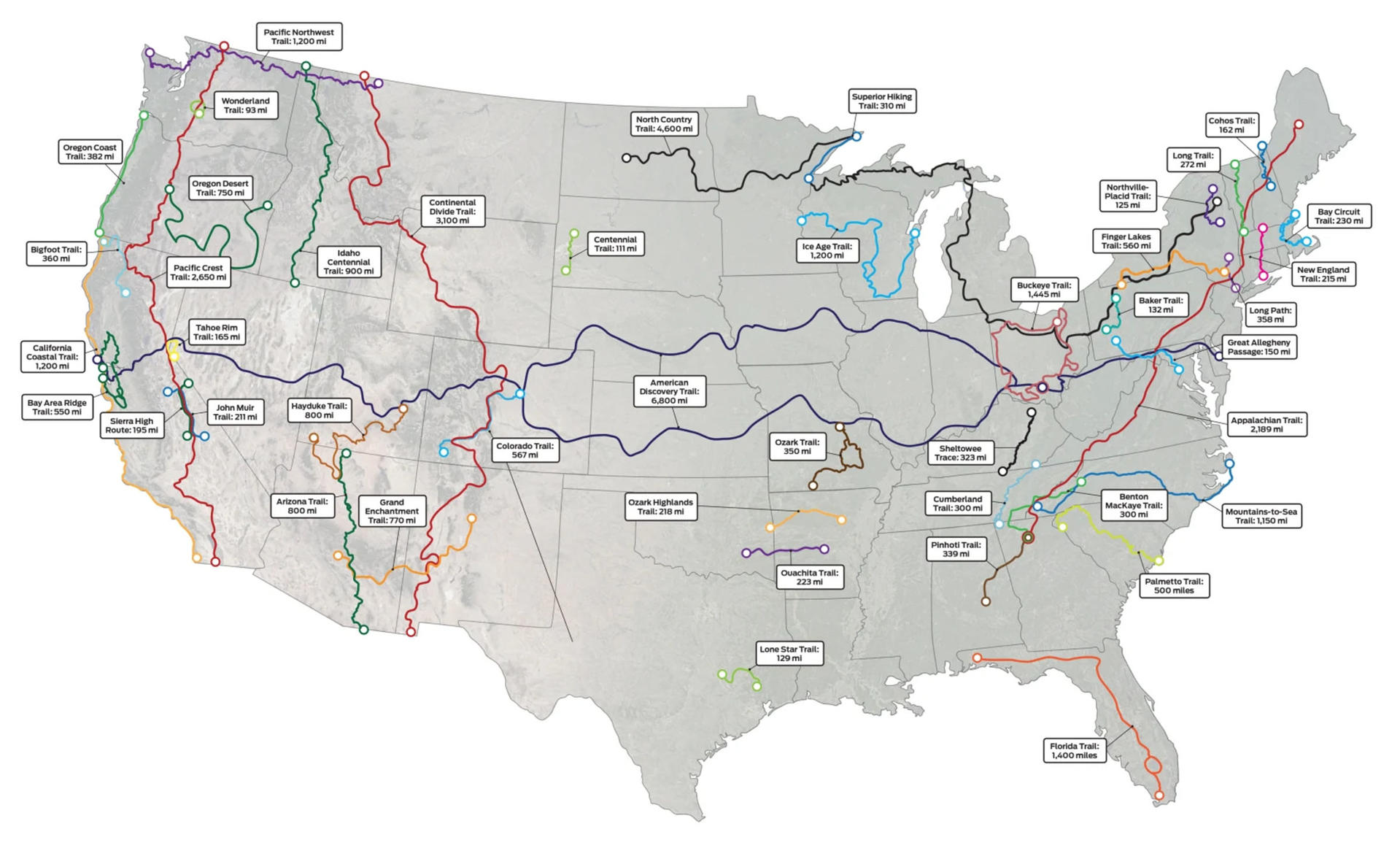
My feeling is, these hiking trails might provide alternative transportation routes if highways are blocked due to natural disasters or highway repair issues …
Image: “This is a map of the Class I Railroads I made using DOT data,” by Kmusser, 9 August 2006, in Wikimedia Commons. This file is licensed under the Creative Commons Attribution-Share Alike 2.5 Generic license.
Image: “This is a map of the Class I Railroads I made using DOT data,” by Kmusser, 9 August 2006, in Wikimedia Commons. This file is licensed under the Creative Commons Attribution-Share Alike 2.5 Generic license.
…
6.4 CAVEATS FOR UNITED STATES DOMESTIC TOURISTS top
It may become more difficult to travel from state to state; this may have to do with lack of availability of gasoline, or lack of availability of charging stations for electric cars.
United States tourists may find it less safe to travel to other states. Their lives may even be imperiled while staying in some small towns that are distant from their own residences.
There may be tampering on a local basis with criminal databases, combined with identity theft and synthetic identity fraud, so that a tourist to a small town in a distant state is fraudulently classed as a criminal, and then subjected to local laws whose flavor and whose meeting of criminal punishment differs greatly from those in the tourist’s home town.
For instance, in the visited town euthanasia of senior citizens might be legal. The ‘captured’ tourist might be legally executed on a charge of senile dementia or Alzheimer’s disease. That charge could be made to stick through unrelated, criminal local people swearing on oath that the person is their spouse, swearing that the age is elderly, stating that the person has no money or means of earning it. Then the tourist might be killed and his or her money divvied up amongst the judge and the perjuring criminal.
Other instances: Blue laws and the penalties for child molestation, and the enforcement of these laws differ greatly from state to state. It is easy to assume that what ‘flies’ in one’s own state will ‘fly’ in the tourist town. Then, quick as a whip, a person might find himself behind bars and far from home, and subject to whatever local scam will fleece him of his money.
Another instance: Drug possession laws differ greatly from state to state. The scenario is the same as for Blue laws.
Drug lords may be in possession of the town, as was the case with Baltimore, Maryland, in recent years. If so, anything goes. Best not to set foot there. It is possible that local law enforcement and local court systems in towns ‘captured’ by drug lords might function in ways unexpected by a tourist, because of the threat of death for themselves and their families, and also because of financial inducements by drug lords. In other words, the tourist’s life might be worth a nickel. Maybe less.
A local tradition of bribery of officials is a consideration for tourists. This horse kicks two ways: You might be jailed if you do not bribe; or you might be fined for attempting to bribe. I am at a loss for words here.
Other instances: Homelessness may be considered a cause for euthanasia without court trial. This stance might be set in place by barring a tourist from local motels and hotels, then accosting him or her while asleep in their car.
Suppose a local gas fill-up were to result in a car breakdown 10 miles away, say, in the desert. Suppose the gas station owner had a group of related men who went out to scavenge vehicle parts, wallet and credit cards of the stranded car owner, and leave his bones beneath a Joshua tree.
[In terms of unexpected services rendered, I have encountered a case a little like that here in Los Angeles, where an acupuncturist demanded to see the drivers license after treatment, as a prerequisite to payment for services rendered. I intuited that the health care practitioner has an expensive addiction, and had been sending round family members to the addresses on the drivers licenses of her clients to burglarize the homes to help finance her habit. To prevent the victims from returning … in other words, to ensure a fresh group of people to be burgled … the acupuncturist set the electric needle settings too high, so that her clients received muscle-stunning electric shocks from the needles.]
The tourist’s sanity may be placed in doubt through false testimony by local mail-order psychologists also claiming at the local police station to be the ‘spouse’. This may be a game with many innings.
I intuit that local sheriffs and judges place more weight on testimony of their friends and neighbors than they do on the testimony of strangers. Where you visit, if you travel alone, may have crime gangs that, in cahoots with a sheriff or law enforcement officer, railroading tourists with intent to gain more tourist dollars. This may be more likely in low per capita towns.
There may be a local tradition of kangaroo courts that convict a tourist of this or that without his or her presence in the courtroom. There may be other legal irregularities, such as a crooked judge who holds a kangaroo court session on a Sunday, with written judgment conveyed, but with no online record of a court case. The kangaroo court paper of the crooked judge might be used to ‘capture’ and shake down the tourist. There is a danger of legal murder by euthanasia after the shake down, so as to prevent the tourist from taking legal action against the offending parties after changing the venue to their own home town.
In other words, the law may not be on your side, or it may not take the stance you expect it to take, when you travel to another state. This may become increasingly true with time, that towns in states other than one’s own may prove lethally unfriendly to tourists.
…
6.4 NEWS THAT SUPPORTS THE THEORY OF A RETURN TO LIBERTARIANISM top
I may be adding to this category as I run across news articles.
United States, government, economics, history, geography, politics, social unrest, Jade Helm, community health, HIV pandemic, AIDS pandemic, homelessness, handheld psychosis, my favorites, future, COVID-19, coronavirus, Libertarianism, democracy, trade, finance, economy, transportation,
Libertarianism, government, U.S. Government, United States government, United States, economy, economics, taxes, IRS, U.S. Post Office, communications, internal revenue service, decentralization,
United States, economy, economics, government, U.S. Government, United States government, decentralization, regionalism, Libertarianism, democracy, libertarianism, military, social security, foreign affairs, trade, transportation, finance, credit unions, handheld psychosis, law enforcement, public utilities, mass murder, social unrest, cognitive dysfunction, discernment,
social unrest, United States, housing, real estate, homelessness, government, state governments, city governments, water transport, utilities, electric utilities, anarchy, California, Utah, Florida, sedition, anarchy, murder, COVID, terrorism, leftwing terrorism, rightwing terrorism, racial tensions, cultural tensions, drug war, neighborhood watch, law enforcement, secret service,
United States, government, libertarianism, state governments, tourism, decentralization,
United States, government, libertarianism, state governments, trade, transportation, decentralization, trade agreements, Southern states, Eastern Seaboard, Western Seaboard, Mexican border, Native Americans, AIDS, HIV, Breadbasket, foodstuffs, agriculture,





.svg)



_LOC_2011594649.jpg)